
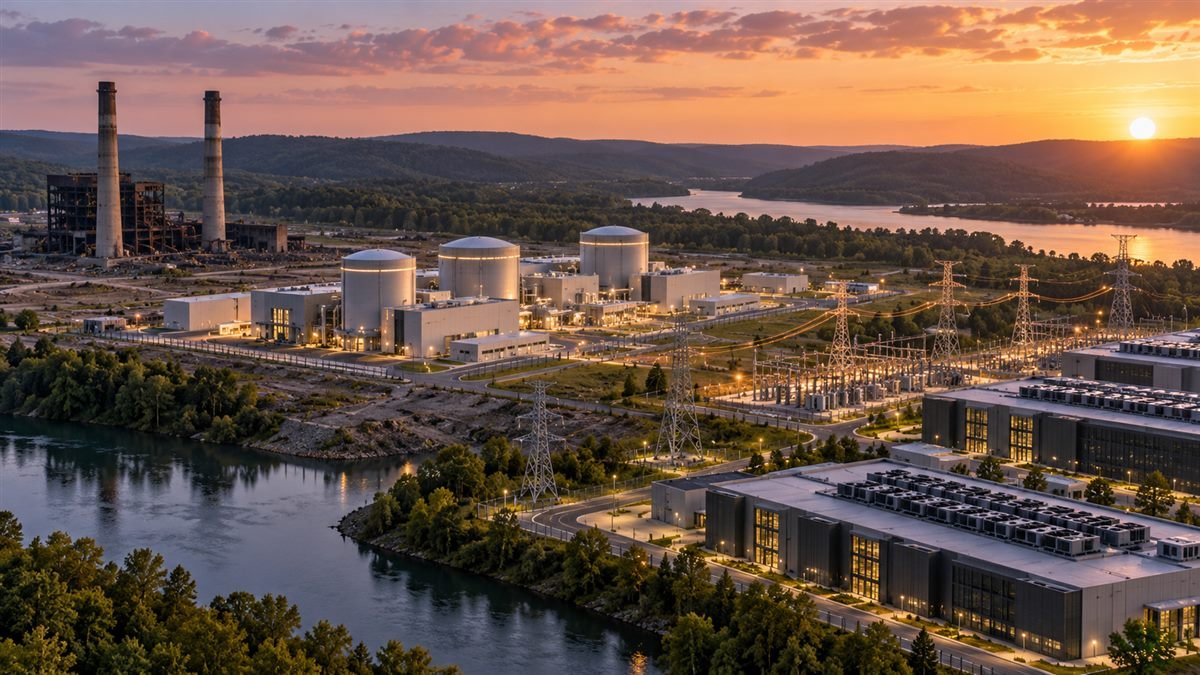
Amazon is backing a proposal to build 12 small modular nuclear reactors at a former coal site in Indiana, a plan that would provide up to 960 megawatts of power if completed. TechCrunch reports the project involves utility AEP and reactor developer X-energy, with Amazon expected to be an initial customer. The proposal connects a familiar technology-sector challenge—reliable electricity for data centers—with a power project whose engineering, financing, and regulatory work will unfold over years.
Why a former coal site matters
Repurposing an existing energy location can offer infrastructure and a community familiar with power generation, but it does not remove the technical or legal steps required for a nuclear project. A proposed reactor needs detailed design review, site-specific approvals, construction planning, fuel arrangements, grid connections, and a credible cost structure. The project’s announced capacity describes a plan, not electricity currently available to customers.
Small modular reactors are designed to use factory-built modules and repeatable designs. Supporters argue that standardization could make projects easier to build than large one-off plants. The commercial record is still developing, and the timeline and economics of any specific project depend on licensing, manufacturing, construction, and the ability to finance multiple units. X-energy’s reactor design and the broader SMR industry remain subject to those real-world tests.
Why an online retailer is investing in power
Cloud computing and AI services require continuous electricity, and data-center operators are increasingly looking for power sources that can run around the clock. Long-term energy commitments can help a company plan capacity while also affecting local grids and communities. Amazon’s role as a proposed customer may help underpin demand, but it does not guarantee that the reactors will be completed or that all power will be dedicated to a single facility.
That distinction matters for customers and residents. They will want to know who pays for grid upgrades, how the development is scheduled, what public approvals remain, how emergency planning works, and how costs are allocated if the project changes. These questions are part of assessing the announcement, not reasons to assume the project will fail or succeed.
What to monitor
Watch for formal filings, licensing progress, construction milestones, disclosed financing, and independent cost and schedule updates. The computing buildout driving energy demand is also changing chip markets; see our report on Tenstorrent’s AI hardware funding and other Technology coverage.
Source: TechCrunch’s report on Amazon’s Indiana nuclear proposal. Capacity and project partners are described as announced plans, subject to future approvals and execution.



Reader Discussions
No comments posted yet. Be the first to start the discussion!
Leave a Reply