
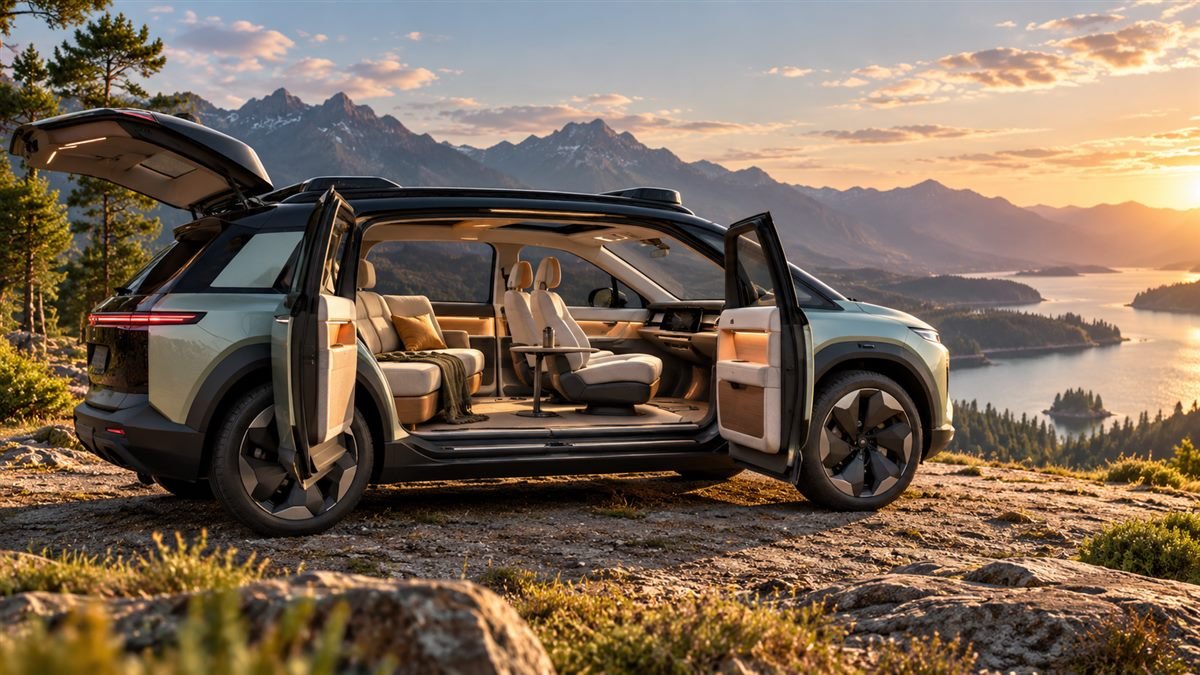
Autonomous driving is often discussed as a software feature, but Rivian CEO RJ Scaringe argues it could eventually change the shape and use of vehicles themselves. TechCrunch reports that Scaringe sees a future where a car designed around more capable autonomy might look and function very differently from today’s driver-operated truck or SUV. That is a vision for what mature automation could enable, rather than a description of a vehicle buyers can use without supervision today.
Why autonomy could affect the cabin
If a vehicle can handle a journey safely without a person continuously steering, designers could rethink where occupants sit, how they use travel time, and which controls dominate the interior. Such a shift would affect more than dashboards. It could change crash structures, sensor placement, seating layouts, accessibility, and the business case for owning or sharing a vehicle. Each change depends on a system that can operate reliably across real roads and difficult edge cases.
Scaringe’s comments should be read alongside the limits of current driver-assistance features. Rivian’s present systems require the driver to remain attentive and ready to take control. A company may plan upgrades or future capabilities, but a promised software milestone is not the same as demonstrated, broadly available self-driving capability. Weather, construction, unusual road behavior, and failures in sensors or maps remain practical challenges.
The gap between a design vision and a product
Automakers face long development cycles. A cabin or body designed for a new operating model must satisfy safety rules, manufacturing constraints, consumer expectations, and repair networks. It also requires clear responsibility when automation makes a mistake. Even if software improves quickly, regulators and buyers will need evidence that the complete vehicle system performs consistently.
For Rivian, the near-term business still depends on delivering current vehicles and scaling upcoming products. Investors and customers should separate the company’s long-range autonomy strategy from measurable current features, their geographic availability, and the driver’s legal duties. The most useful updates will describe operational boundaries and independent performance data, not just a distant end state.
What to watch next
Look for explicit descriptions of which roads and conditions a system supports, who must monitor it, and what happens when it reaches its limits. For a separate angle on Rivian’s in-car software strategy, read our article about third-party AI agents in Rivian vehicles, then browse more Technology coverage.
Source: TechCrunch’s interview coverage of Rivian CEO RJ Scaringe. Future design possibilities are attributed to Scaringe; current assistance remains supervised.


Reader Discussions
No comments posted yet. Be the first to start the discussion!
Leave a Reply