
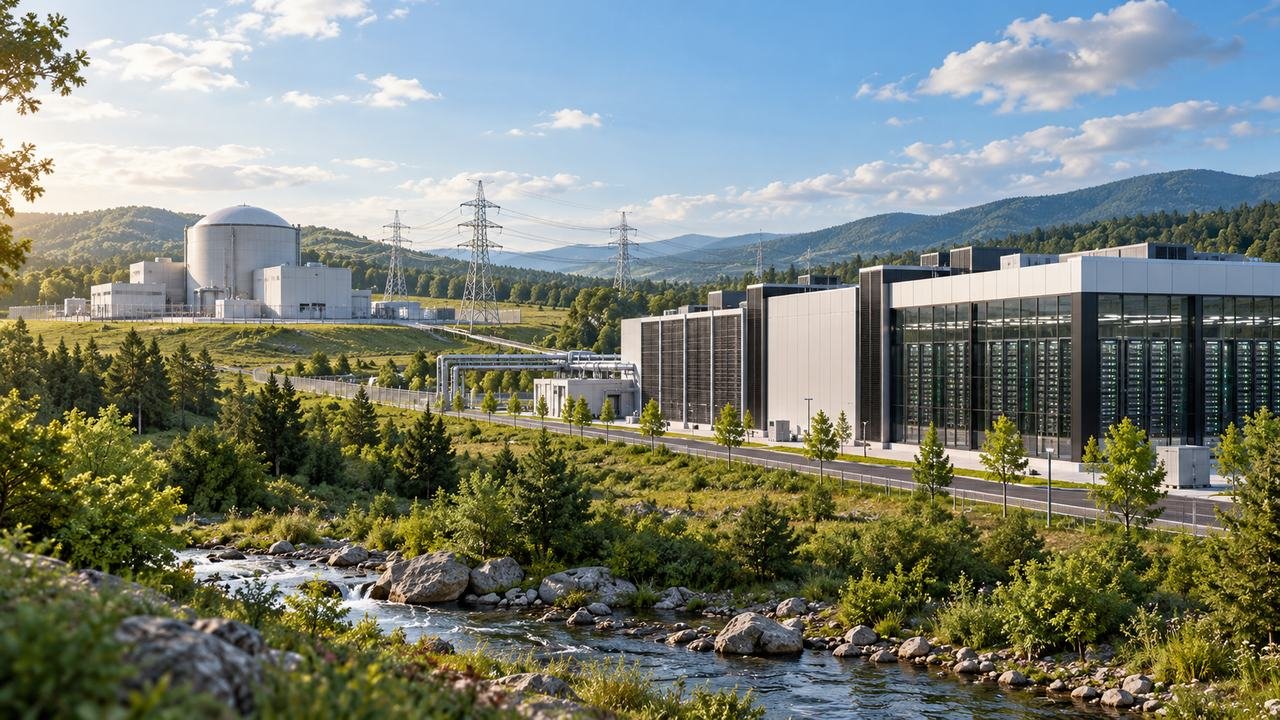
The Escalating Energy Demands of Artificial Intelligence
As deep learning foundation models continue to expand in scale and complexity, global data center energy consumption is reaching unprecedented levels in 2026. High-density server racks housing thousands of graphical processing units and specialized AI accelerators demand massive, uninterrupted electrical power around the clock. Traditional renewable energy sources like solar and wind, while highly beneficial for sustainability, suffer from seasonal and daily intermittency that can complicate hyperscale computing operations. Consequently, leading technology corporations are turning toward Small Modular Nuclear Reactors (SMRs) as the primary solution for reliable, zero-emission baseline power.
This strategic shift toward clean baseline power is already generating substantial momentum across the technology industry. For instance, major cloud infrastructure providers are executing long-term energy agreements to power massive server clusters, as detailed in recent coverage of Amazon backing 12 proposed small nuclear reactors at an Indiana coal site. Converting decommissioned industrial sites into clean nuclear energy centers provides immediate access to existing grid connections while decarbonizing the surrounding region.
Understanding Small Modular Reactor Technology
Small Modular Reactors represent a major technological evolution over conventional legacy nuclear facilities, offering enhanced safety features and streamlined deployment models:
- Factory-Fabricated Assembly: SMR components are mass-manufactured in standardized factory settings and shipped directly to computing sites, drastically reducing construction timelines and capital investment costs.
- Passive Safety Systems: Modern modular reactors utilize natural physical principles such as gravity, convection, and self-regulating coolant loops to shut down safely without requiring human intervention or external electric power.
- Flexible Scalable Capacity: Data center operators can deploy individual reactor modules incrementally as facility power requirements grow over time, optimizing energy generation to match workload demand.
Pioneering Sustainable Infrastructure for Next-Generation Compute
By pairing advanced nuclear power directly with hyperscale data infrastructure, technology enterprises can achieve true zero-carbon operations without sacrificing system uptime or compute throughput. Technical standards and engineering research published by the Institute of Electrical and Electronics Engineers (IEEE) emphasize that micro-grid integration and localized nuclear generation eliminate transmission losses and protect critical AI workloads from regional electrical grid volatility.
At the same time, hardware innovation continues to push compute efficiency limits alongside energy generation advances. As documented in our examination of hardware funding rounds like Tenstorrent reaching $6.2 billion valuation in $1.5 billion AI chip round, developing energy-efficient custom silicon works hand-in-hand with sustainable energy infrastructure to reduce total operational footprint across modern computing centers.
Regulatory Frameworks and Operational Deployment Timelines
While the economic and environmental benefits of SMR-powered computing facilities are undeniable, widespread deployment requires navigating complex nuclear licensing frameworks, environmental impact reviews, and community engagement protocols. Regulatory agencies around the world are establishing streamlined approval pathways specifically tailored for standardized modular designs. Tech companies that partner with experienced nuclear engineering developers today are positioning themselves to lead the green computing transition over the next decade.
Conclusion: Powering the Future of Green Artificial Intelligence
The convergence of advanced artificial intelligence and Small Modular Nuclear Reactors represents a critical milestone in sustainable technology infrastructure. By securing dedicated, carbon-free baseload energy through SMR technology, hyperscale operators can meet the exponential power demands of frontier AI models while fulfilling ambitious corporate sustainability commitments. Nuclear-powered compute centers will inevitably serve as the backbone of global green technology infrastructure throughout 2026 and far into the future.


Reader Discussions
No comments posted yet. Be the first to start the discussion!
Leave a Reply